


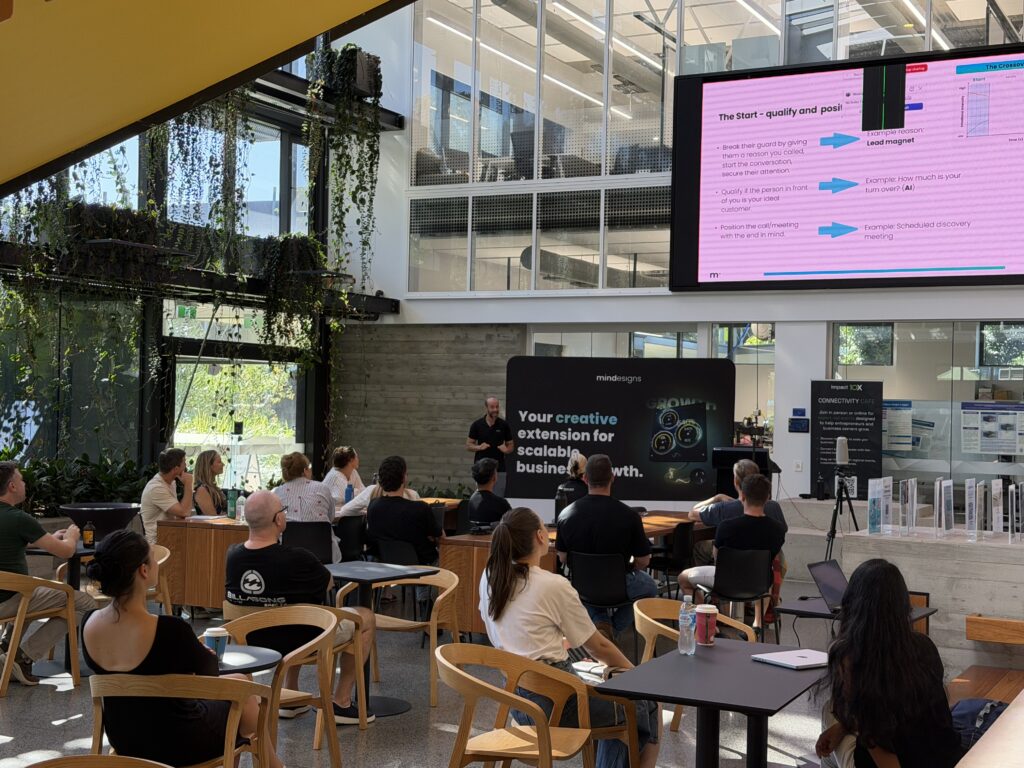
How do you know the exact moment a prospect is ready to buy? According to Omer Bernstein, the head of marketing and sales at Mindesigns, the answer sits in the buying signals in sales conversations that most businesses completely miss.
That was the big idea at the recent Expert Session, where Omer unpacked the sales methodology, he trains his own team on. He was joined by Jacob Todd, Partner Manager at HubSpot, who shared with the room how AI is quietly reshaping every stage of that process.
And Omer is speaking from experience. At Mindesigns, a Hubspot solutions partner,
he sells to midsize and enterprise clients across finance, education, and cybersecurity, and this exact framework has closed real deals for them, including one that turned a single template download into a six-figure retainer. Here’s what he taught, and what those who joined the session took away from it.”
Want to watch the full session? Sign up here to get access to the complete recording.
What are buying signals?
Buying signals are the clues a potential customer gives off when their intention shifts from browsing to genuinely considering a purchase. As Omer said, a few of these clues are hard to miss. For example, someone asking what it costs, when you could begin, or how fast they’d see results. Other clues are subtle, but they matter just as much. If a prospect does most of the talking, they care enough to talk about their problem. If they compare you with other competitors, that means they’re already considering, not just comparing. And if they start pitching your idea to their own team, that means they’re halfway to onboarding their company. People don’t put in that effort for something they don’t plan to buy.
According to Omer, most businesses treat every conversation the same way. They either keep pitching to a prospect who has already made up their mind, or they push for a decision from someone who was never really interested. Both cost deals, and both come from the same blind spot of not reading the signals in front of you.
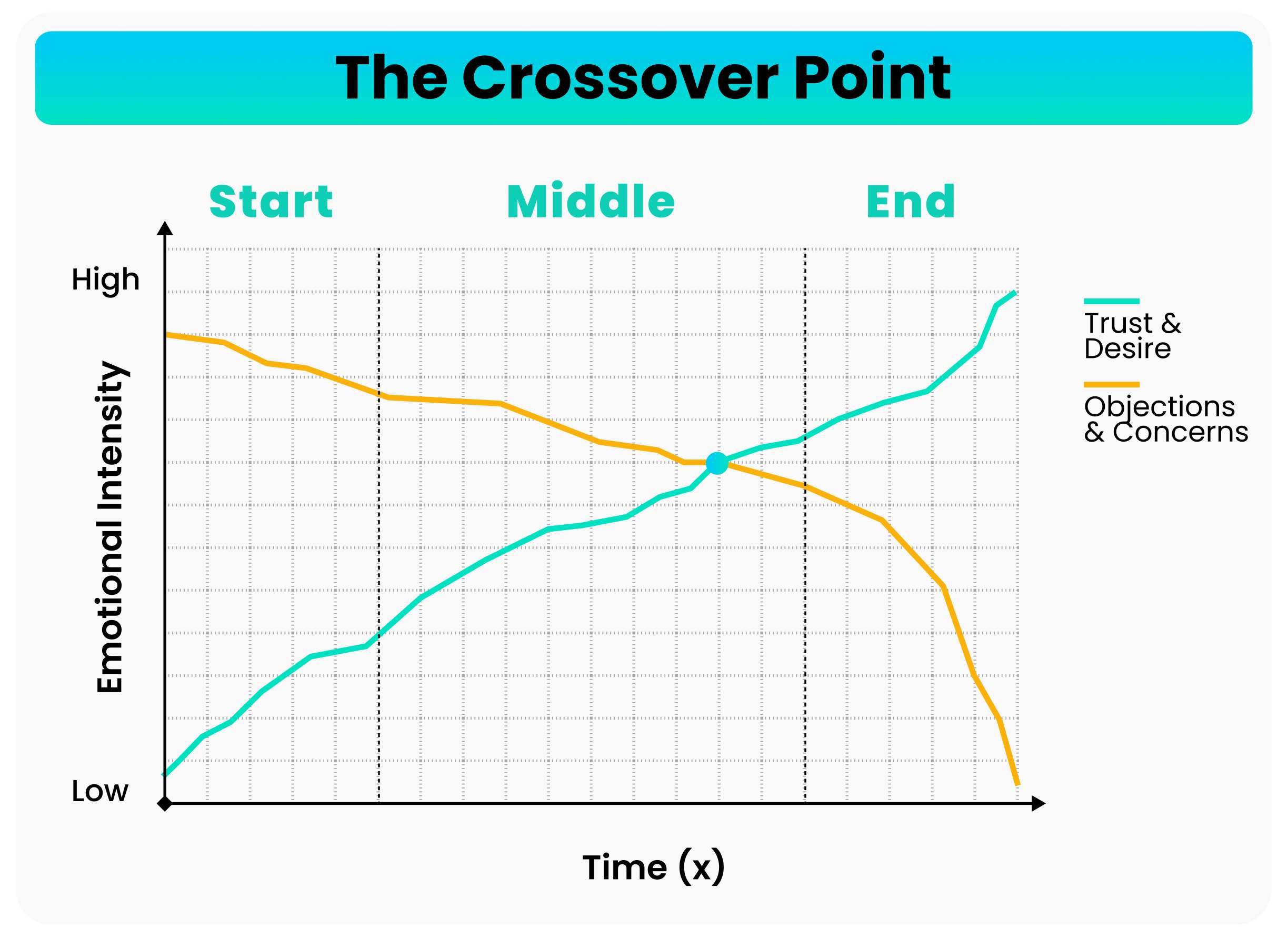
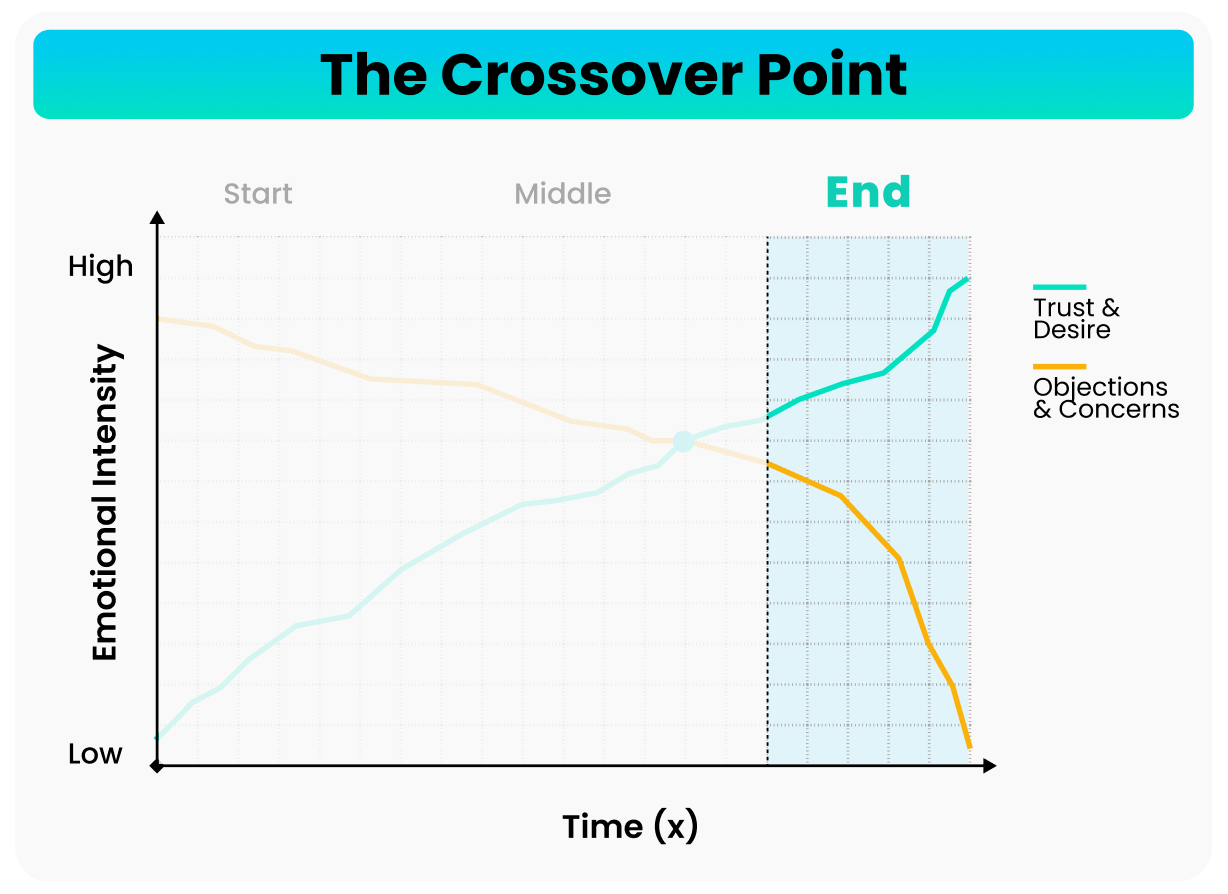
At the live session, he broke every deal into three stages, the start, the middle and the end. The turning point in that journey is what he calls the ‘Crossover Point’.
Inside the Mindesigns’ buying signal framework
Omer’s framework maps every deal as a tug-of-war between two forces.
Objections and concerns run high when a conversation begins, while trust and desire start low. If the salesperson does their job well, the two lines eventually swap places, and each of the three stages has its own role in getting them there.
The start
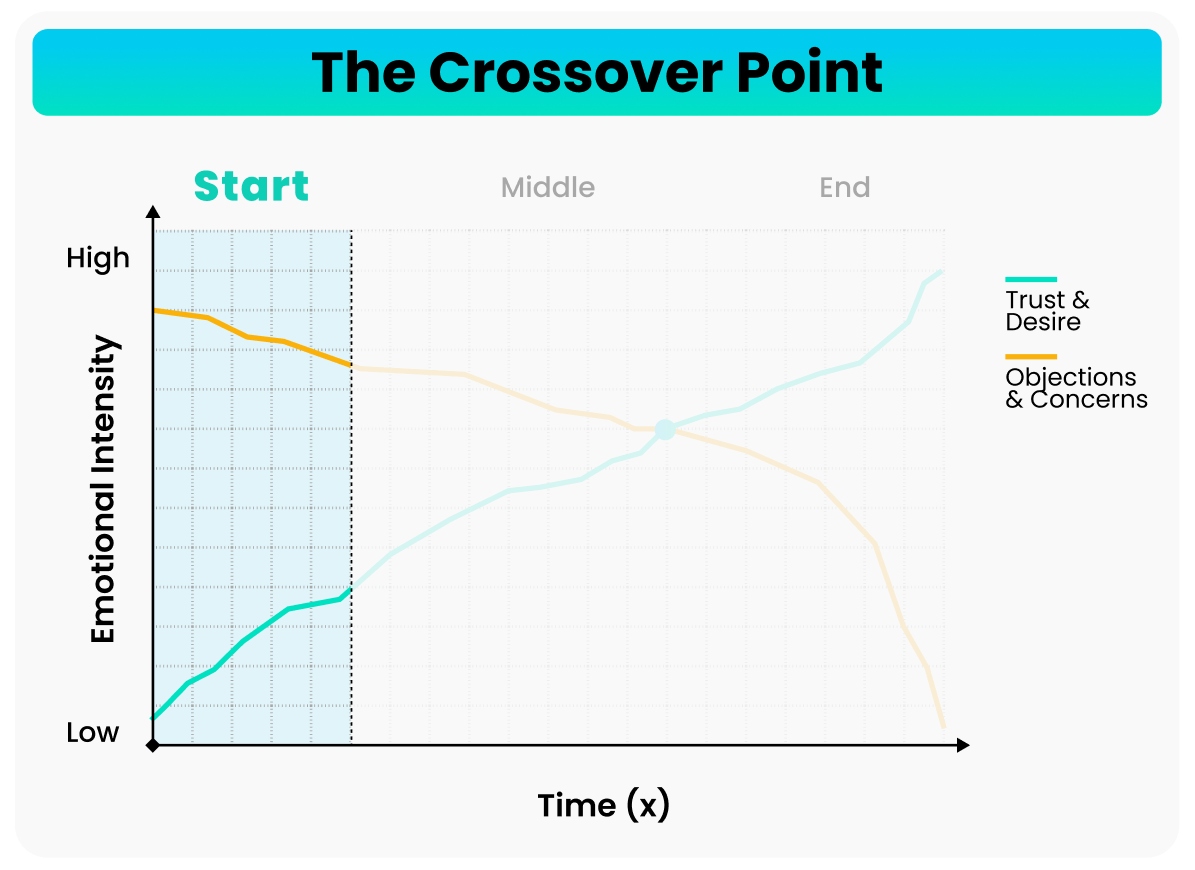
This is where the customer’s guard is at its highest, especially on outbound calls. Omer’s advice to the room is to never start a conversation with what you sell. Open with a genuine reason to be calling, like following up on a guide they downloaded or a change happening in their industry. The only goal of this stage is a conversation that earns the next meeting, and a good lead magnet gives every call an honest reason to exist.
“If your cold calls have a reason, even if you don’t know this person, if you have a good reason, then that is worth doing that cold call.”
The middle
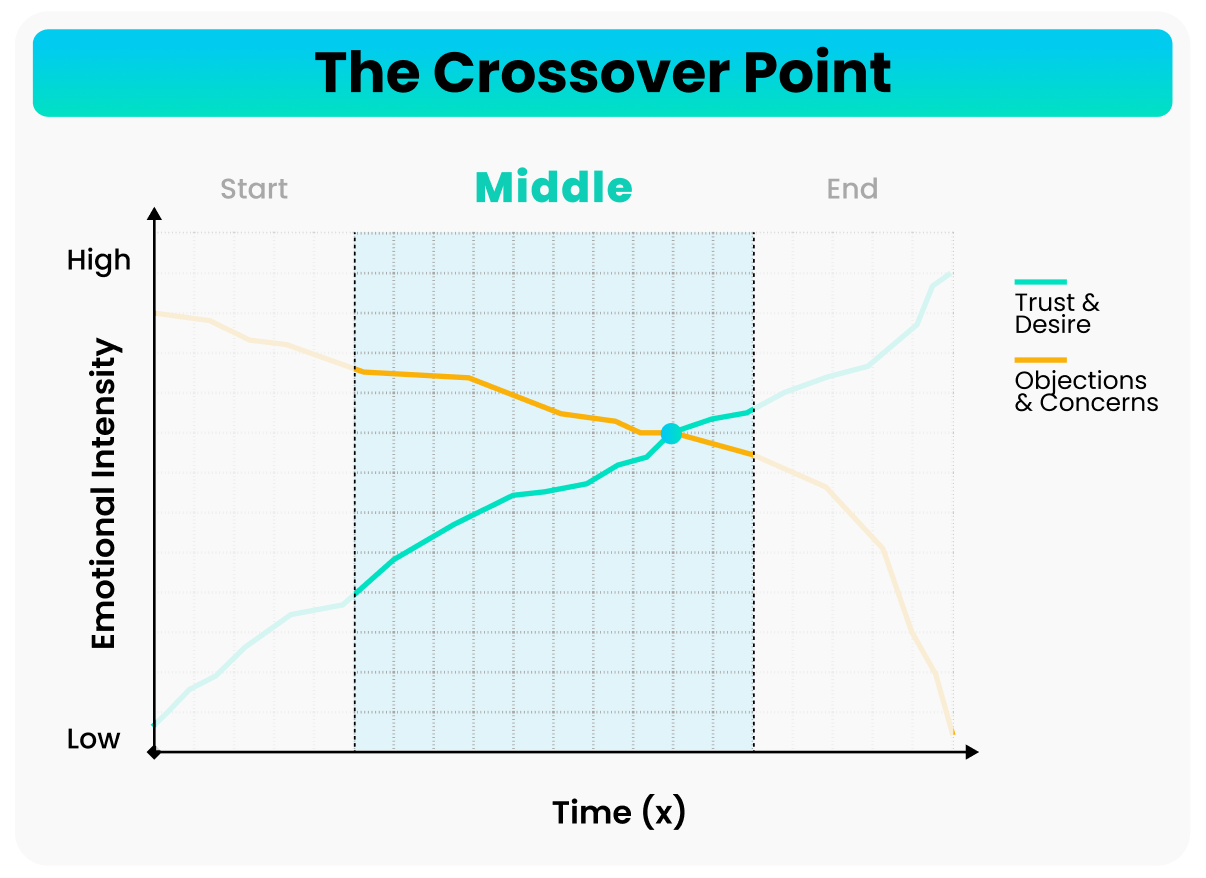
This is where the real detective work happens. Omer compared customers to a room full of people asked whether they’re thirsty. Everyone answers differently, and you can’t sell water until you know who’s parched. His technique is to keep the customer talking through questions about where they are now, where they want to be, and what the gap between the two is costing them. He shares the exact questions his team uses in his full B2B sales process guide. Once a connection is built, he also finds out who else will be involved in the decision, so the right people are in the next meeting. Otherwise, you’re relying on your contact to sell for you, and they’ll never do it as well as you would. And when it’s time to present, he shows evidence, real results and case studies.
The Crossover Point
Somewhere in that middle stage, if proper groundwork is done, the swap happens, and Omer gave the room a practical way to recognise it: the customer starts asking and interviewing you.
“They’ll just bombard you with questions if they already passed that crossover point. They want to do business with you. They just have a bunch of objections and concerns that we need to address.”
Questions about timeframes, onboarding, or results in their industry are not resistance. They’re evidence of interest. Before the ‘Crossover Point’, the salesperson asks nearly all the questions. After it, the customer takes over the asking, and the salesperson’s job becomes answering with proof. Omer walks through that handover in detail in his crossover point framework article on the Mindesigns blog.
The end
Once the customer runs out of questions, Omer told the room, don’t hide behind “I’ll send you a proposal.” Invite their feedback on what they’ve seen, surface any final concerns, and ask for the decision directly. His go-to line drew a few knowing laughs: “Would you say it’s a smart idea to start this week or the next?” And for customers frozen by the size of the decision, he suggested shrinking the risk, like offering a shorter initial commitment, to make saying yes easier than staying stuck.
Not every deal closes on the call, Omer admitted, and that’s fine. If the groundwork was done well, all the detail gathered along the way makes every follow-up sharper, and the deals that should close usually do.
How AI is changing the way businesses read buying signals
Jacob Todd, Partner Manager at HubSpot, shared how Breeze AI works. Breeze is the AI built directly into the HubSpot platform. Jacob explained how it sits inside the CRM where a business’s deals, contacts and conversations already live, making it “AI that already knows your business” rather than a tool starting from a blank page.
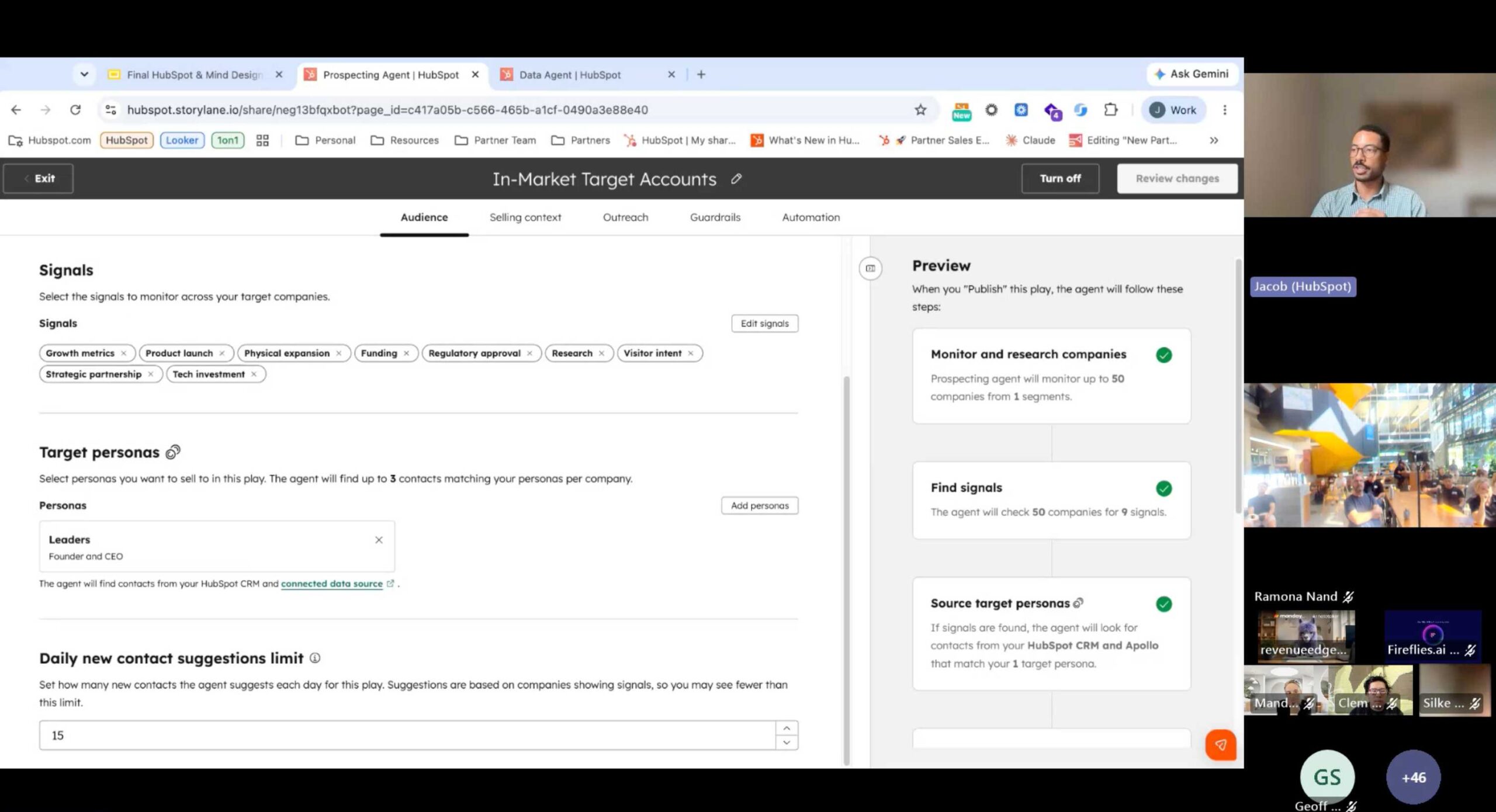
For the start of a deal, a prospecting agent works like a tireless business development representative, watching target accounts around the clock for the buying signals a human would take hours to find, then drafting outreach for a real person to review. For the middle, a data agent gathers the detail behind each conversation, so nothing a customer says gets lost between meetings.
Omer added a habit of his own that got the room’s attention: he asks permission to record his strategy calls, then lets AI transcribe and summarise them. An hour of conversation holds more concerns and clues than anyone catches live, and the transcript regularly surfaces things he missed, which makes the follow-up sharper.
The pair were also upfront about the limits. Not every business needs this level of automation, Omer noted. The value shows up once there’s a sales team to train, or a founder ready to hand their selling knowledge to one.
Start spotting buying signals in sales
It’s time to stop guessing whether a customer is ready, and start watching for the moment they begin asking you the questions. Until then, stay curious, keep them talking, and prove your claims with evidence instead of promises. Once the questions start flowing, answer them well and ask for the decision with confidence.
Omer has written up the complete methodology in detail, including the exact discovery questions his team uses, the word-for-word closing lines, and how AI supports each stage. You can read the full framework in his article, The B2B Sales Process That Tells You Exactly When a Prospect Is Ready to Buy, over on the Mindesigns blog.
Join us at the next ‘Expert Session’
Sessions like this one are what the ‘Expert Session’ series is all about. It’s practical, tested know-how from people doing the work, and free for our local business community.
If you’d like to be part of the next session, head to our upcoming events page and save your seat. Sessions are free, and you can join in person at the JCU Ideas Lab in Cairns or online from anywhere.